A large tree over the house with nowhere to drop it
When the roof, the garage, and the neighbor's fence surround the tree on all sides, there is no safe place to lower big wood. The crane takes each piece up and away instead of down.
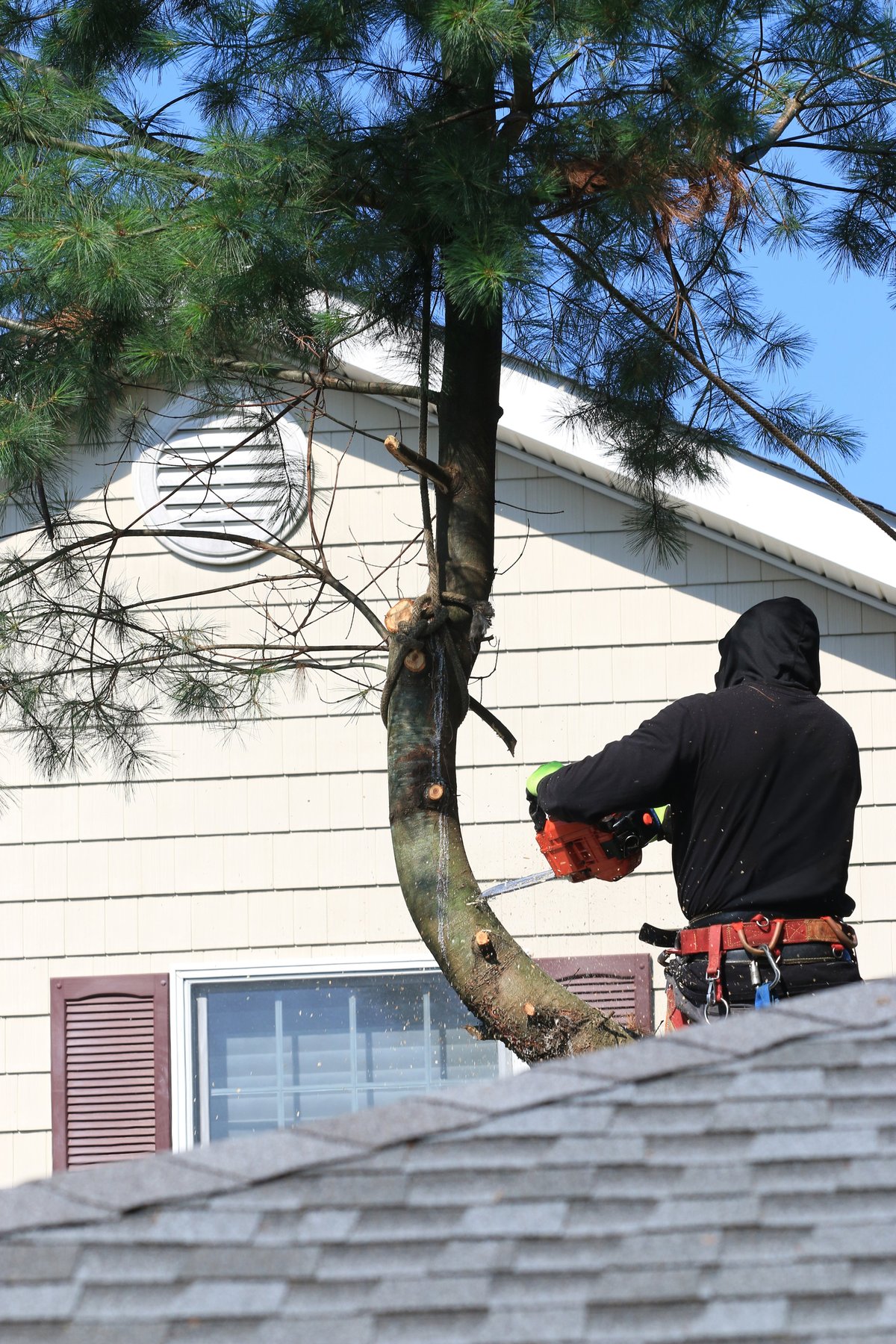
Some trees can't be climbed and can't be dropped: a dead oak leaning over the roof, a giant maple behind a rowhouse with no side yard, a storm-split trunk hung up on the garage. For those, we bring in a crane, lift the tree out piece by piece, and set every section down on the street or driveway instead of your lawn.
Is your tree a crane job?
We tell you on the first visit
Smaller machine if it can do the job
A 75-foot spider lift reaches many backyards for less than a crane.
One day for most crane removals
Setup to cleanup, including the street swept.
Permits handled for you
Right-of-way permits where the municipality requires them.
Fixed written price after we see the tree.
Free on-site estimate. The number on the estimate is the number on the invoice.
Text or call a crew leadA crane holds each section of the tree before it is cut, then lifts it over the house to a landing zone. Nothing is dropped, rolled, or dragged.
Large trees over houses, dead trees too brittle to climb, and trees with no ground access.
Many trees that look like crane jobs can be reached with our 75-foot tracked spider lift for less. We tell you which one your tree needs.
A 75-foot spider lift, a bucket truck, a skid steer, and a dump truck, plus a crane brought in with its operator for the jobs that need one.
Most crane removals finish in a single day, including cleanup.
A crane parked on a public street may need a right-of-way permit. We handle it.
A crane costs more per hour than anything else in tree work, so we only bring one in when it is the safest way, or the cheapest overall way, to get the job done. These are the situations where it usually is.
When the roof, the garage, and the neighbor's fence surround the tree on all sides, there is no safe place to lower big wood. The crane takes each piece up and away instead of down.
Dead ash, killed by emerald ash borer, and other trees that have been dead for a season or two turn dry and brittle. Tying a climber into one is a gamble. With a crane, the crew works from the outside and the crane carries the weight.
Pittsburgh is full of houses with one narrow gate, a set of steps, or no side yard at all. A crane can reach over the house from the street and take the tree out the way it would never fit on the ground.
A tree resting on a roof is loaded in ways that make cutting dangerous. The crane takes the weight first, so cuts don't drop the trunk further into the house. See emergency tree service.
A 90-foot oak that would take a climbing crew two days can often come down in a few hours with a crane. Even at a higher hourly rate, the total can come out lower.
We use the smallest machine that can do the job safely. That keeps your price down and keeps heavy equipment off your lawn when it isn't needed.
Best for: Healthy trees with room to lower sections
Limits: Not safe on dead or badly damaged trees
Best for: Trees within reach of a driveway or street
Limits: Needs truck access close to the tree
Best for: Backyard trees a truck can't reach, and dead trees too risky to climb
Limits: Sections still have to be lowered; needs room to set its outriggers
Best for: Big wood over houses, no drop zone, no ground access, or very large trees
Limits: Needs a level setup spot and room to swing
A spider lift is a tracked aerial lift that drives on rubber tracks, folds down narrow, and stands on four outriggers that spread its weight. It drives into backyards where a bucket truck can't go, then puts a climber 75 feet up without anyone tying into a weak tree. For many backyard removals, it is the reason a crane isn't needed at all.
Our skid steer moves logs and brush from the backyard to the street, so wood isn't dragged across your lawn or carried by hand down the steps. Our dump truck hauls wood and chips away the same day. On crane jobs, both keep the landing zone clear so the crane never waits.
Site visit. We look at the tree, measure the distance from the street or driveway, check overhead lines, and estimate the weight of the biggest pieces.
Crane plan. The crane is sized to the job: reach to the tree, and capacity at that reach for the heaviest pick.
Permits. If the crane sits on a public street, we apply for the permits the municipality requires. In the City of Pittsburgh, work in or occupancy of the public right-of-way needs a permit from the Department of Mobility and Infrastructure.
Neighbors. We let you know when a neighbor's driveway, the street, or an alley will be blocked so you can give them a heads-up.
Setup. The crane sets up on its outriggers, on pads that protect the pavement. Mats go down anywhere equipment crosses grass.
Rigging each pick. A climber or the spider lift operator ties the crane's line to a section before it is cut. The crane takes the weight, then the cut is made.
Lifting out. The crane lifts the section over the house and sets it down in the landing zone on the street or driveway.
Processing. The crew cuts and chips each piece as it lands. The skid steer and dump truck keep the landing zone clear.
Cleanup. Every piece hauled, the yard raked and blown, the street swept.
Most crane removals take a single day from setup to cleanup.
Cranes and overhead lines are a deadly combination. OSHA's crane rules require a crane to stay at least 20 feet from energized lines rated up to 350 kilovolts unless the line is de-energized or other protections are in place. On the site visit, we map every line near the tree and the crane's swing path. When lines are in the way, we coordinate with the utility, Duquesne Light or West Penn Power, to de-energize, cover, or work around them before the crane goes up.
Many Pittsburgh streets are narrow, steep, or lined with parked cars. Crane setup takes room, so we plan the setup spot, the swing path, and the landing zone around the street, and arrange no-parking where the municipality requires it.
A crane needs level ground to set up. On a sloped street, the outriggers are cribbed and leveled before any lift. On a hillside lot, the spider lift is often the better tool, because it can level itself on its outriggers where a crane can't set up.
Older Pittsburgh neighborhoods put big trees in backyards with no way in but through the house. The crane reaches over the roofline and takes the tree out the front.
One price, one crew, one day in most cases. Nothing on this list is an add-on.
Want it looked at?
Free on-site estimate, and we'll tell you if the spider lift can save you money.
Get a Free Written EstimateA site visit and written crane plan: setup spot, reach, and landing zone
A fixed written price that includes the crane, its operator, and setup
Permits for street occupancy where the municipality requires them
Power line planning and utility coordination
Pads and mats under the crane and equipment
Every section lifted, not dropped, over roofs, pools, and gardens
Full cleanup: wood and brush hauled the same day, yard raked, street swept
Stump grinding as a separate line, so you can add it now or later. See stump grinding.
We don't publish prices, because a crane job depends on the crane needed and the hours it runs. A single crane pick from the driveway and a full day lifting a 100-foot oak over a rowhouse are different jobs. You get a fixed price in writing after we see the tree.
Crane size. Reach and capacity at that reach set which crane is needed.
Hours on site. The number of picks and how fast the crew can rig and cut.
Setup. Distance from the street, slope, and how much room the crane has.
Permits and traffic control. Required for street setups in some municipalities.
Power lines. Utility coordination can add time.
Cleanup choices. Leaving firewood or chips lowers the cost.
The number on the estimate is the number on the invoice.
When the spider lift can do the job instead, we'll tell you, and the price will reflect it.
Free on-site estimate
Written, itemized, no surprises
Same-day cleanup included
Text photos of the tree for a faster answer.
We bring cranes to jobs across Pittsburgh and within 40 miles of our yard in Elizabeth.
Elizabeth, McKeesport, West Mifflin, Jefferson Hills, Clairton
See the areaBethel Park, Mt. Lebanon, Upper St. Clair, Whitehall, Baldwin
See the areaMonroeville, Plum, Penn Hills, Murrysville, Oakmont
See the areaEvery neighborhood, including the rowhouse and hillside streets where crane work is most common.
(412) 618-07125.0 stars from 75+ Google reviews
5.0
Google rating
75+
Google reviews
40
Mile service radius
Still unsure which machine your tree needs? Call (412) 618-0712 and we'll tell you straight.
The Tree Wise Men don't publish crane removal prices, because the cost depends on the crane size the job needs, how many hours it runs, where it can set up, and whether permits or power line work are involved. On very large trees, a crane often costs less overall because it turns a multi-day climb into a few hours. You get a fixed written price after we see the tree.
A crane is usually needed when a large tree stands over a house with nowhere to drop wood, when a dead tree is too brittle to climb safely, when there is no ground access to the backyard, or when a storm-damaged tree is resting on a structure. Many backyard trees that look like crane jobs can be reached with a tracked spider lift instead, which usually costs less.
A spider lift is a tracked aerial lift that drives on rubber tracks, folds down narrow enough to fit into many backyards, and stands on four outriggers that spread its weight. The Tree Wise Men use a 75-foot spider lift to reach backyard trees a bucket truck can't get to, and to work on dead trees without tying a climber into them.
Not if the setup is planned for it. The crane sets up on pads that spread its load, usually on the street or driveway, and mats go down wherever equipment crosses grass. Because every section is lifted out rather than dropped, the lawn under the tree is usually untouched.
Most crane removals finish in a single day, from setup to cleanup. Very large trees or several trees on one property can take longer, and the estimate states the expected time.
Often, yes. In the City of Pittsburgh, working in or occupying the public right-of-way requires a permit from the Department of Mobility and Infrastructure, and other municipalities have their own rules. The Tree Wise Men apply for the permits the job requires.
Usually. A crane set up on the street can reach over a house to a backyard tree, depending on the distance and the weight of the heaviest piece. If the reach is too far for the crane that fits on your street, the spider lift or rope rigging may be the better choice.
Yes, with planning. OSHA's crane rules require at least 20 feet of clearance from energized lines rated up to 350 kilovolts unless the line is de-energized or other protections are in place. The Tree Wise Men map every line on the site visit and coordinate with the utility before the crane goes up.
Not necessarily, but most homeowners like to be. Once the estimate is approved and permits are in place, the crew can work while you're away. The crew lead will call before starting and when the job is done.
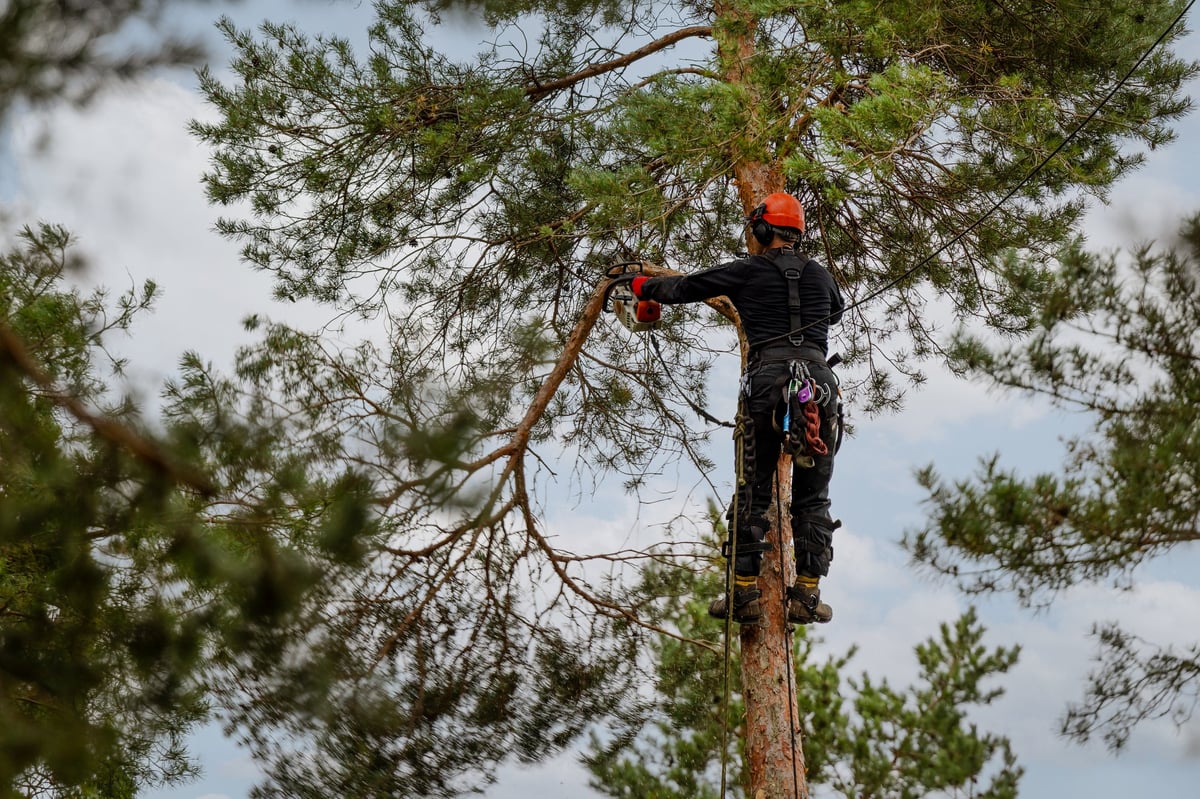
Have the tree looked at, and we'll tell you whether it needs a crane, the spider lift, or neither.
PA HIC #15245 · Fully insured · ISA Certified Arborist on staff